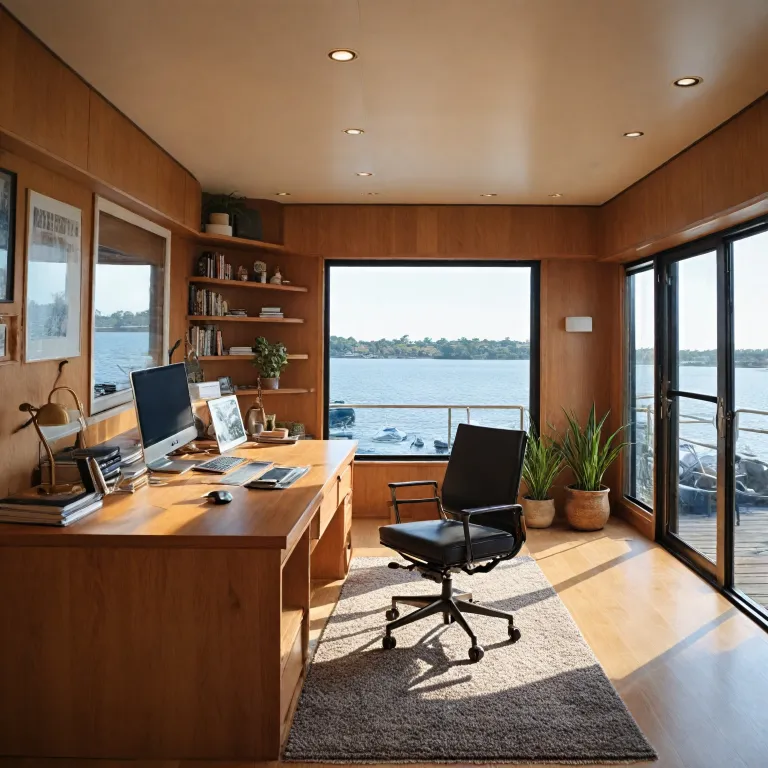
Why an office on a houseboat appeals to modern professionals
An office on a houseboat attracts travellers who want work and leisure aligned. Many guests are remote professionals who see a floating office as a memorable unique alternative to a standard hotel room. They value a refined working environment where the main content of each day can shift smoothly from laptop to lounge deck.
For these travellers, the houseboat itself becomes a temporary business base. Instead of a conventional office space in a city tower, they enjoy a floating office that rocks gently at the marina. This setting suits business owners who want to test houseboat living before committing capital to buy boat assets of their own.
Luxury booking platforms now curate premium houseboats and boats that are fully equipped for running business activities. Guests can simply open their laptop in a quiet office on a houseboat and connect to high bandwidth internet provided by upgraded marinas. Many office marina operators in the USA and Europe now extend fiber to the dock, which supports video calls and cloud based company tools.
Liveaboard residents interviewed for recent reports highlight the balance between privacy and proximity to city centres. A small office boat moored close to urban transport can feel as practical as a serviced apartment, yet far more characterful. For travellers, this hybrid model offers the comfort of a refined hotel room with the flexibility of a working boat that doubles as a serene retreat.
Designing a refined floating office that works as well as it looks
Creating an effective office on a houseboat starts with careful spatial planning. Designers and builders favour open floor plans that allow a compact office space to flow into living areas without clutter. Multifunctional furniture helps a small floating office feel generous, especially when boats are under 15 metres long.
Marine architects recommend built in desks that face large windows, so the working environment feels bright and calm. A dedicated office on a houseboat should include ergonomic seating, task lighting, and secure storage for business documents. These details matter for business owners who may need to manage profit loss statements or sensitive tax files while travelling.
Sound insulation is another priority when you create a workspace on water. Quality materials reduce noise from neighbouring boats, the office marina, and passing working boat traffic. This ensures that video calls with a company team feel as polished as meetings in a traditional office building.
Technology integration is central to the design of any office boat used for running business operations. Marinas increasingly provide reliable Wi Fi, while many houseboats add cellular routers or satellite systems as additional backup. As one expert notes, “Yes — marinas often provide Wi-Fi or dockside hardwired connections; supplemented with cellular hotspots or satellite Internet for mobility.”
Costs, capital, and tax considerations for a houseboat based office
Travellers considering an office on a houseboat often ask about cost and capital requirements. For short stays booked through luxury platforms, pricing usually reflects both premium accommodation and specialist office space. Nightly rates can exceed those of a comparable hotel room, yet guests gain a memorable unique setting for focused work.
For those thinking about houseboat living as a semi permanent business base, the financial picture becomes more complex. Typical yearly slip and basic marina fees can be several thousand euros, depending on region and services. In some US examples, the average annual cost for liveaboard fees and mooring reaches around 6 000 USD per year.
Business owners who buy boat assets for a dedicated office boat should seek professional tax advice. In some jurisdictions, part of the running business expense may be deductible when the vessel is used primarily as an office. However, local authorities treat boats, houseboats, and floating office structures differently, so personalised guidance is essential.
Travellers using a booking website do not usually face these long term profit loss calculations. They pay a clear nightly cost, while the boat owner and marina handle maintenance, insurance, and regulatory compliance. This model allows guests to test an office on a houseboat without committing capital, which can inform any later decision to create their own floating office or purchase additional boats.
Legal, safety, and regulatory realities guests should understand
Even when you only book an office on a houseboat for a short stay, regulations still matter. Marinas operate under local authorities that set rules for safety, environmental protection, and liveaboard limits. Guests benefit when a company or individual boat owner manages these requirements with care and transparency.
Floating office structures and houseboats may fall under building codes, navigation rules, or both. In some regions, a small office boat used as a fixed business base must meet standards similar to floating homes. Elsewhere, working boat regulations apply, especially when the vessel moves between marinas or along canals.
Premium booking platforms typically highlight whether a houseboat is licensed for overnight stays and commercial use. Responsible operators also clarify fire safety measures, life jackets, and emergency procedures in the main content of their listings. This allows guests to skip main uncertainties and focus on planning their trip rather than decoding regulations.
Travellers should also check whether their stay includes access to secure office marina facilities. These may offer gated pontoons, CCTV, and controlled visitor access, which are important when running business activities from a floating office. When in doubt, simply open a dialogue with the host or company representative and ask how they comply with local authorities and maritime rules.
Choosing the right marina and destination for work friendly stays
The success of an office on a houseboat experience depends heavily on marina choice. A well managed office marina provides stable power, fresh water, and reliable internet, all essential for running business tasks. Many marinas in California, the Mediterranean, and major European rivers now market themselves as remote work friendly.
When browsing a luxury booking website, pay attention to how each listing describes connectivity and services. Some houseboats and boats highlight fiber to the dock, while others rely on cellular routers as additional support. If your company work involves large file transfers or video conferences, prioritise a floating office with robust bandwidth guarantees.
Location also shapes the character of your working environment. A small office boat moored in a quiet lagoon offers calm, yet may require longer transfers to city meetings. By contrast, a houseboat living setup in a central urban marina can feel as convenient as a hotel room, with cafés and co working spaces nearby.
For inspiration on refined itineraries, travellers can explore guides to luxury river cruise houseboats that emphasise slow travel and high service levels, such as this article on the allure of luxury river cruise houseboats for discerning travelers. These routes often combine scenic cruising with moorings near cultural landmarks, which suits business owners who extend work trips into leisure stays. Whatever the destination, ensure that the marina and boat owner clearly outline services, quiet hours, and guest responsibilities.
How luxury booking sites curate office ready houseboats for travellers
Specialised platforms now curate office on a houseboat options with the same care once reserved for high end suites. They vet each houseboat and office boat for safety, comfort, and connectivity, then present the main content in clear, structured listings. This helps travellers skip main guesswork and compare working environment details at a glance.
Key criteria include dedicated office space, ergonomic seating, and sufficient power outlets for devices. Many listings specify whether the floating office is suitable for one person, a couple, or small teams. Some even outline how the layout supports running business tasks during the day and relaxing evenings on deck.
Premium platforms also pay attention to the profile of business owners and boat owners behind each listing. Verified hosts who manage multiple boats or houseboats often operate as a company with professional standards. They may offer additional services such as airport transfers, meeting arrangements, or curated local experiences for guests.
Clear policies on profit loss risk, cancellations, and rights reserved statements further enhance trust. Travellers should review these terms carefully, especially when booking longer stays that function as a temporary business base. When a listing explains tax relevant invoices, local authorities compliance, and safety measures in detail, it signals a mature operation that understands the needs of modern professionals.
Practical tips for travellers booking an office on a houseboat
Before confirming an office on a houseboat, clarify your work priorities. If your company role involves frequent calls, ask the boat owner about noise levels from neighbouring boats and marina activity. A small floating office in a quiet corner berth may suit you better than a central, lively pier.
Check whether the listing specifies internet speed, backup options, and power reliability. For travellers who manage sensitive profit loss data or tax documents, secure storage and privacy are essential. You may wish to create encrypted backups before arrival, as even well equipped office marina networks can experience occasional outages.
Pack with the working environment in mind rather than treating the stay like a standard holiday. Lightweight monitors, noise cancelling headphones, and cable organisers can transform a compact office space into a highly efficient floating office. Many guests also bring small comforts such as a travel keyboard or laptop stand to support long working sessions.
Finally, remember that houseboat living, even for a short stay, invites a slower rhythm. Plan your business schedule with additional buffer time for tides, weather, or marina logistics. When you balance capital W work with moments on deck, the office on a houseboat becomes more than a novelty ; it turns into a refined way of running business while travelling, with all rights reserved to your own sense of time and place.
Key figures about the cost and feasibility of a houseboat office
- Average liveaboard slip and basic fees in some US marinas are around 6 000 USD per year, which forms a baseline for estimating long term houseboat living costs.
- Many marinas in popular regions now advertise high bandwidth internet and upgraded dockside infrastructure, reflecting growing demand from remote professionals.
- Designers increasingly integrate renewable power sources such as solar panels and battery systems to support office equipment on small boats and houseboats.
Frequently asked questions about having an office on a houseboat
Do you have reliable internet on a boat office ?
Yes — marinas often provide Wi-Fi or dockside hardwired connections ; supplemented with cellular hotspots or satellite Internet for mobility. Travellers should still confirm details with the boat owner or company, especially if their work depends on video calls or large file transfers. Backup options such as mobile hotspots are recommended for critical business tasks.
What legal or regulatory issues exist for a houseboat office ?
Regulations vary by country, region, and even individual marina. You may encounter rules related to docking permits, liveaboard status, environmental protection, and safety equipment, all overseen by local authorities. When booking, look for listings that clearly explain compliance and do not hesitate to ask hosts for written confirmation.
How much does it cost to live and work from a houseboat ?
Costs depend on region, marina services, and the type of boat or houseboat you choose. In some US examples, average annual expenses for slip and liveaboard fees are around 6 000 USD per year, excluding insurance and maintenance. Short term bookings on luxury platforms convert these yearly figures into nightly rates, allowing travellers to sample the lifestyle without major capital commitments.
