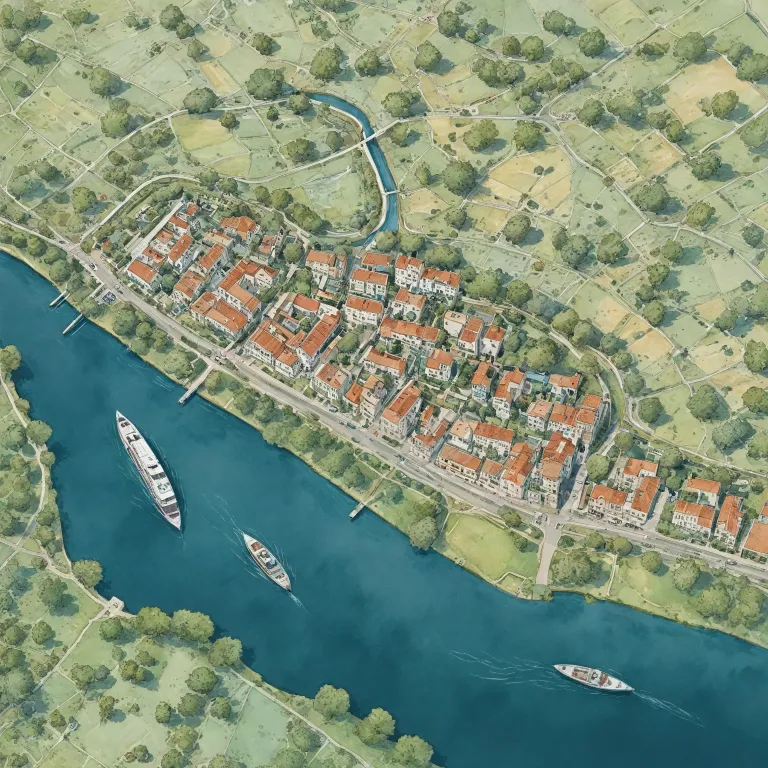
Tracing elegance along the canal du midi map for houseboat guests
Planning a luxury houseboat stay begins with understanding how the canal du midi map shapes your journey. This historic canal weaves between the Atlantic Ocean and the Mediterranean Sea, and its measured pace perfectly matches refined slow travel on the water. For guests used to premium hotels, the map becomes your concierge, revealing each village, lock, and port in graceful sequence.
The canal itself is a 240 km ribbon of water that transformed inland traffic and trade, and its layout still guides every modern boat itinerary. When you study the canal du midi map, you see how the canal midi links Toulouse to the Étang de Thau, then onward to the open Mediterranean Sea through channels near Les Onglous. This linear geography is essential for luxury planners who must balance cruising time, lock passages, and curated onshore experiences.
Each section of the canal tells a different story of history and engineering, and the map helps you match those stories to your preferred level of comfort. Pierre-Paul Riquet, often written as Pierre Paul Riquet, designed the original construction canal project in the seventeenth century, and his vision still defines today’s summit level and lock system. When you overlay modern premium houseboat services on this heritage structure, the canal du midi map becomes both a navigation tool and a cultural itinerary.
For discerning travelers, the map also clarifies how far you can cruise between locks without rushing. Some stretches between each lock saint complex are short and intimate, while others near the summit level or the Seuil de Naurouze feel broad and open. Reading these water levels and distances on the canal du midi map allows you to schedule long lunches, wine tastings, or spa treatments on board without worrying about missing a lock passage.
From Toulouse to the sea: key segments on the canal du midi map
The city of Toulouse is the natural starting point for many luxury houseboat itineraries, and it appears prominently on every detailed canal du midi map. Here the canal connects with the Canal Garonne, creating the historic inland route between the Atlantic Ocean and the Mediterranean Sea that once reduced dangerous coastal traffic. For premium guests, this junction is more than a technical feature ; it is where urban culture, fine dining, and serene waterway cruising meet.
Leaving Toulouse, the canal midi climbs gently toward the summit level near the Seuil de Naurouze, a key point you will notice on any serious study of the map. This summit level is where the rigole de la plaine feeds water into the canal, maintaining a stable level that allows boats to move smoothly in both directions. When you examine the canal du midi map, you can see how the rigole de la plaine threads through the landscape, a quiet but vital artery for every boat and hotel barge.
Downstream from the summit, the canal descends through a series of locks that shape your daily rhythm on the water. Luxury operators use the canal du midi map to time these locks precisely, ensuring that guests enjoy unhurried meals and shore excursions between each lock saint complex. This is where a premium booking website adds value, translating raw map data into curated segments with recommended mooring spots, driver services, and private guides. For deeper inspiration on refined floating stays, many travelers compare these French itineraries with other exclusive houseboat stays and luxury escapes on water.
As you approach the lower reaches toward the Étang de Thau, the canal du midi map reveals a widening of the waterway and a shift in scenery. Here, the water level responds more directly to the nearby Mediterranean Sea, and captains must read both the map and local conditions carefully. For guests, this transition from enclosed canal to open lagoon marks a memorable chapter in the journey, framed by seafood villages and sunlit ports.
Engineering icons on the canal du midi map for discerning travelers
A luxury houseboat voyage along this waterway is enriched when you can pinpoint its engineering icons on the canal du midi map. The famous round lock at Agde, often highlighted in guidebooks, is a masterpiece where several directions of traffic converge in a single circular basin. Seeing the round lock marked on your map helps you plan arrival times so you can watch boats maneuver while enjoying champagne on deck.
Bridges are another essential layer of the canal midi story, and the map helps you anticipate each one. The bridge Pont Vieux in Béziers, the bridge Saint structures in several towns, and the Pont Neuf in Toulouse all appear as elegant crossings over the water. Some are road bridges, some are railway bridge constructions, and each bridge pont tells a different chapter of regional history and architectural style.
Locks and aqueducts also stand out when you study the canal du midi map in detail. The long series of locks near Béziers, combined with the Orb aqueduct, shows how Pierre Paul Riquet and later engineers solved complex level changes without disrupting river traffic. When you glide through these locks, you experience how the construction canal techniques of the seventeenth century still support modern hotel barge comfort, from stable water levels to smooth transitions between each basin. For travelers comparing European waterways with other refined marinas, resources on refined houseboat stays on lakes and marinas can provide useful context.
Even smaller features like the rigole de la plaine or lesser known bridge saint crossings gain meaning when you can locate them precisely. A detailed canal du midi map will show how these channels and bridges interact with villages, vineyards, and towpaths. This allows luxury planners to design themed days around engineering, wine, or gastronomy, always anchored by the reassuring clarity of the map.
Mapping luxury: how premium booking sites curate canal du midi itineraries
For travelers used to five star hotels, the main challenge is translating a complex canal du midi map into a seamless luxury experience. Premium booking platforms for houseboats act as interpreters, turning distances, locks, and bridges into curated days of relaxed waterborne living. They analyze how many locks and bridges lie between each village and port, then propose itineraries that feel indulgent rather than rushed.
These platforms rely on precise knowledge of water level management, especially near the summit level and the Seuil de Naurouze. By understanding how the rigole de la plaine feeds the canal midi, they can anticipate seasonal variations that might affect boat traffic or lock timings. This technical study of the canal du midi map underpins practical advice on when to cruise, when to moor, and when to schedule private transfers for onshore excursions.
Luxury guests also expect clarity about how far they are from the sea or major cities. A well designed booking interface overlays the canal du midi map with markers for Toulouse, the Étang de Thau, Les Onglous, and key bridge pont or railway bridge landmarks. This allows guests to visualize how their boat will move from inland canal to coastal lagoon, and eventually toward the Mediterranean Sea, while still enjoying hotel barge amenities such as fine dining and spa treatments.
Some platforms go further by integrating editorial content that explains the history of Pierre Paul Riquet and the broader construction canal story. They highlight how the canal once linked the Atlantic Ocean to the Mediterranean Sea for commercial traffic, and how today it serves mainly leisure boats and premium cruises. For travelers comparing French waterways with other refined waterfront escapes, curated guides to houseboat rentals for refined waterfront escapes can help benchmark service levels and amenities.
Choosing embarkation points and villages using the canal du midi map
Selecting the right embarkation port is one of the most strategic decisions you will make, and the canal du midi map is your best ally. Many luxury itineraries begin near Toulouse for easy air and rail access, while others start closer to the Étang de Thau to emphasize coastal flavors and sea breezes. The map helps you compare how many locks, bridges, and villages you will encounter in each direction from your chosen port.
When you study the canal midi in detail, you notice clusters of locks and bridges that shape the daily rhythm of travel. Areas with many locks in quick succession create a lively spectacle of boats rising and falling, ideal for guests who enjoy watching the choreography of water and engineering. Quieter stretches with fewer locks and more open water between each bridge pont or bridge saint crossing are better suited to guests seeking uninterrupted spa time or private dining on deck.
Villages along the canal often grew around strategic points such as a lock saint complex, a railway bridge, or a historic Pont Vieux. The canal du midi map shows how these settlements align with the waterway, allowing you to plan overnight stops that combine heritage, gastronomy, and easy access back to your boat. Some guests prefer to stay near the Seuil de Naurouze or the summit level to appreciate the canal’s hydraulic genius, while others gravitate toward Les Onglous and the Étang de Thau for a stronger connection to the Mediterranean Sea.
For travelers fascinated by history, the map also reveals how the canal once formed part of a grand route between the Atlantic Ocean and the Mediterranean Sea. You can trace how traffic shifted from commercial barges to leisure boats and hotel barge cruises, yet still follows the same water level logic devised by Pierre Paul Riquet. This layered reading of the canal du midi map turns a simple holiday into a nuanced journey through engineering, trade, and regional culture.
Practical map reading tips for luxury houseboat guests
Even when you have a professional captain, understanding the canal du midi map enhances your sense of control and comfort. Start by identifying the main axes between Toulouse, the summit level, the Seuil de Naurouze, and the Étang de Thau, then note how many locks and bridges lie between them. This simple study helps you grasp how far your boat can travel in a day without compromising the relaxed pace expected on a luxury cruise.
Next, pay attention to symbols for locks, bridges, and ports, which are crucial for planning activities. Each lock saint icon indicates a change in water level, and clusters of locks may require more time than a similar distance on open water. Bridge pont and bridge saint symbols, including notable structures like Pont Neuf, Pont Vieux, and various railway bridge crossings, show where the canal interacts with roads and railways, which is useful for arranging private transfers or guided excursions.
Many modern digital versions of the canal du midi map allow you to overlay additional information such as restaurants, vineyards, and cultural sites. Luxury booking platforms often preselect points of interest that align with premium expectations, from Michelin listed dining rooms to discreet spa facilities near the canal midi. When combined with knowledge of the rigole de la plaine, Les Onglous, and the transition from inland canal to the Mediterranean Sea, these overlays turn a static map into a dynamic planning tool.
Finally, remember that this waterway is both a living navigation route and a monument to Pierre Paul Riquet’s construction canal vision. “The Canal du Midi is a 240 km long canal in Southern France, connecting the Garonne River to the Mediterranean Sea, built in the 17th century.” Keeping this quote in mind as you read the map adds depth to every lock, bridge, and village you pass. It reminds you that today’s serene hotel barge journeys float on centuries of engineering, trade, and human ambition.
Key figures and essential questions about the canal du midi
The canal du midi map becomes even more meaningful when you pair it with a few essential statistics. The waterway stretches for approximately 240 km, a distance that shapes how many nights you might spend on a luxury houseboat between Toulouse and the Étang de Thau. Along this length, you will encounter around 86 locks, each one adjusting the water level so boats can move smoothly between the Atlantic Ocean side and the Mediterranean Sea side of the route.
These numbers also explain why the summit level and the Seuil de Naurouze appear so prominently on detailed maps. Maintaining the correct water level at this high point is crucial, and the rigole de la plaine plays a central role in feeding the canal midi. When you see these features labeled on the canal du midi map, you are looking at the backbone of Pierre Paul Riquet’s construction canal strategy, which still governs traffic and navigation today.
Key statistics for travelers
- Length of the Canal du Midi : 240 km of navigable canal between Toulouse and the Étang de Thau.
- Number of locks : 86 locks managing water level changes along the route.
- Completion period : seventeenth century engineering, later refined by additional works and structures.
Frequently asked questions
What is the Canal du Midi ?
The Canal du Midi is a 240 km long canal in Southern France, connecting the Garonne River to the Mediterranean Sea, built in the 17th century. On a canal du midi map, you will see it running from Toulouse toward the Étang de Thau, with numerous locks, bridges, and villages along its banks. For luxury houseboat guests, this map is the foundation for planning elegant itineraries that balance cruising time, cultural visits, and fine dining on the water.
Why was the Canal du Midi built ?
It was constructed to create a navigable waterway linking the Atlantic Ocean to the Mediterranean Sea, facilitating trade and economic development. When you examine a detailed canal du midi map, you can trace how this inland route reduced the need for risky sea voyages around the Iberian Peninsula. Today, the same infrastructure supports leisure boats and hotel barge cruises, turning a former commercial artery into a serene corridor for premium travel.
Who built the Canal du Midi ?
The canal was designed and overseen by engineer Pierre-Paul Riquet in the 17th century. His vision for the canal midi, supported later by other engineers, included the summit level, the Seuil de Naurouze, and the intricate network of locks and bridges you see on modern maps. For travelers, understanding Riquet’s role adds a layer of appreciation when gliding past each lock saint, bridge pont, and village port along this remarkable waterway.
