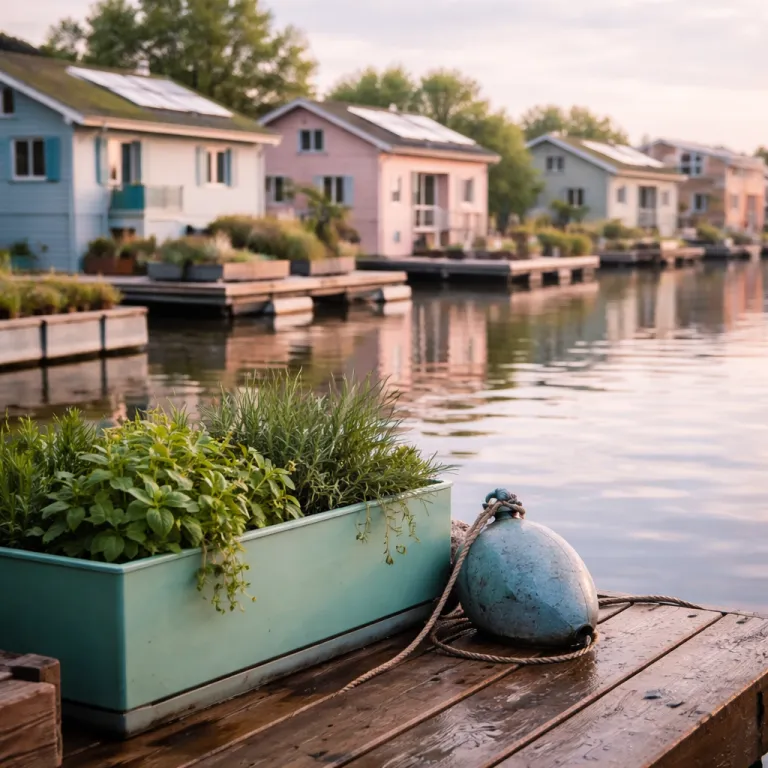
From eccentric retreats to climate resilient floating homes
Step onto a well designed houseboat today and you are not just checking into a room. You are stepping into a working prototype of climate resilient floating homes, where every line of the hull and every solar panel speaks to a future shaped by water. For business leisure travelers used to glass towers on land, this shift from static housing to adaptive floating dwellings can feel quietly radical.
Floating homes were once curiosities moored at the edge of cities, more bohemian than boardroom ready. As sea levels rise and flood maps redraw the outlines of each coastal city, these same floating structures are being reimagined as serious climate adaptation tools and not just lifestyle accessories. When you book a premium houseboat now, you are often testing climate resilient housing solutions that engineers later scale into full floating development projects for low lying districts.
The Netherlands has moved fastest, and the Dutch relationship with water runs deeper than postcard canals. In Amsterdam and Rotterdam, architects treat every new floating city concept as both real estate and research, using modular structures to study how rising sea levels interact with daily life. For travelers, that means your floating home stay can double as a masterclass in how coastal cities might function when land reclamation is no longer the default answer to level rise.
Schoonschip, Dragonfly Afloat and the new language of sustainable luxury
Nowhere is this convergence of luxury and climate adaptation clearer than at Schoonschip in Amsterdam Noord. This compact neighborhood of floating homes sits on a quiet canal, yet it has become a global reference point for climate resilient housing and for water based urban living in particular. Guests who arrange short stays through curated platforms are not just renting homes on water; they are stepping into a living laboratory of sustainable development.
The community uses solar power, heat pumps and floating foundations to create off grid comfort that feels more like a discreet design hotel than an experiment. Schoonschip’s 46 households, as documented in the project’s own planning material, share smart energy systems and generate a significant share of their electricity from rooftop panels, illustrating what researcher Michael Avdeev summarizes in his work on amphibious architecture: floating structures that sit on water and adjust to changing water levels. That concise description hides a sophisticated ecosystem of buoyant foundations, shared energy systems and carefully managed public space that many coastal cities now study as they plan for rising sea levels.
Design firms such as Dragonfly Afloat and Waterstudio.NL work with partners like Sea Villages and Munich Re Foundation to refine these solutions floating between lifestyle and infrastructure. Their projects in the Netherlands and beyond use modular development, sustainable materials and amphibious structures to create housing that can respond to a rising sea without sacrificing comfort. If you are drawn to eco houseboat stays, read about the eco houseboat revolution with solar and rainwater systems before you book, because many of the same climate resilient technologies now appear in premium rentals from Amsterdam to Florida.
From Bangladesh to Florida: what your houseboat stay reveals about climate risk
Luxury travelers often first encounter climate proof floating homes in polished marinas, yet the concept was stress tested in far harsher conditions. In Bangladesh and Vietnam, floating homes and floating schools emerged as direct responses to climate change, where seasonal floods and every new rise in sea level made conventional housing untenable. These are not lifestyle choices; they are based solutions to keep education, housing and livelihoods functioning in low lying river deltas.
Researcher Idowu Ajibade, writing on floating settlements in climate vulnerable regions, frames the stakes clearly by noting that these communities are designed to adapt to rising sea levels and floods. When you glide across a calm bay in a premium houseboat, it is worth remembering that the same floating structures logic protects families in flood resilient villages thousands of kilometres away. The difference lies in finishes and service levels, not in the underlying climate adaptation strategy that keeps homes safe as sea levels continue their slow rise.
Florida now sits at the intersection of these worlds, where hurricane exposed coastal housing and soaring insurance costs push developers to consider floating development as a serious alternative. Here, climate resilient floating homes are marketed both as exclusive retreats and as practical solutions floating above projected storm surge lines. When you book a high end houseboat in Miami or along the Gulf, you are often staying in a pilot project that local authorities quietly monitor as they weigh future zoning for coastal space and confront questions about upfront construction costs, insurance coverage and evolving maritime regulations.
Houseboat bookings as a front row seat to the floating city future
For the executive traveler extending a business trip, choosing a houseboat over a conventional hotel is no longer just a romantic gesture. It is a way to experience climate adaptive floating homes at human scale, to feel how a well insulated hull, a silent solar array and a carefully balanced mooring transform water into stable ground. The gentle movement underfoot becomes a daily reminder that climate change is not abstract when your bedroom literally rises and falls with the tide.
In Rotterdam, a stay near the largest floating office in the world, the Floating Office Rotterdam (FOR) used by the Global Center on Adaptation, offers a particularly sharp lesson in how work and water now intersect. This flood resilient building anchors a cluster of floating structures that include event spaces and experimental floating farm concepts, all designed to show how a floating city district might function without further land reclamation. Booking a nearby premium houseboat lets you watch office workers commute across the quay while engineers test new solutions floating quietly beside your deck.
Elsewhere, from experimental floating farm projects in South Korea to solar powered marinas in North American lakes, the line between leisure and research continues to blur. When you reserve a refined houseboat such as the elegant craft featured in this Lake Powell houseboat review for refined escapes, you are often funding incremental improvements in water treatment, energy storage and modular structures that later migrate into climate adaptation projects in low lying cities. Your choice of stay becomes a quiet vote for climate resilient housing solutions that respect both sea and land.
Key figures shaping the future of floating homes
- Researchers contributing to the IPCC Sixth Assessment Report (AR6, 2021) estimate that global mean sea level rise could approach or exceed 1 metre by 2100 under high emission scenarios, a shift that makes climate resilient floating homes and other floating structures far more than a niche experiment (source: IPCC AR6, Working Group I, Chapter 9).
- United Nations coastal population assessments indicate that roughly 680 million people currently live in low lying coastal zones, a figure projected to surpass one billion by mid century, which means that even a modest level rise will push many cities to consider floating development and flood resilient housing as mainstream options rather than last resort measures (source: UN World Urbanization Prospects and IPCC AR6 Synthesis Report).
- Current research and development programmes on floating homes focus on modular design, sustainable materials and off grid solar energy systems, with prototype communities such as Schoonschip in Amsterdam moving from pilot phase to ongoing implementation over the next several years (sources: Schoonschip project documentation and Munich Re climate resilience reports).