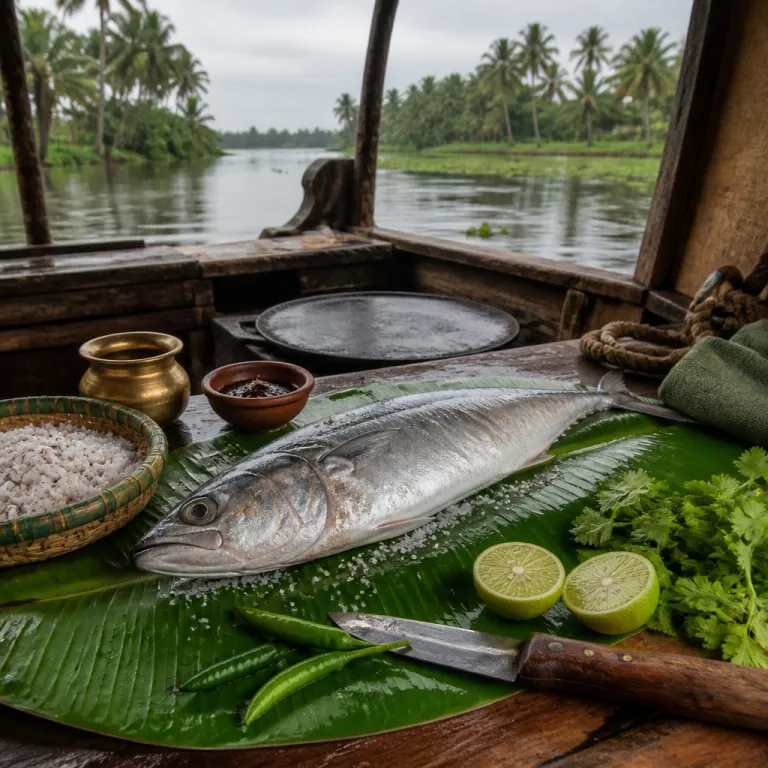
The rhythm of a Kerala houseboat food experience from sunrise
The rhythm of a Kerala houseboat food experience from sunrise
Dawn on the Kerala backwaters feels quiet, glassy, expectant. Your Kerala houseboat is still moored near a village jetty, and the first sound is usually a ladle tapping a steel pot in the tiny galley. This is when the real culinary journey begins, long before any sightseeing trip along the canals.
On a well run Alleppey houseboat, the day’s menu is shaped by what the crew can buy or catch within a few kilometres. The captain often steps off the boathouse at first light to talk with fishermen about the morning’s catch, while the cook checks which tropical seasonal vegetables and fruit are available from passing canoes. That is why no two Kerala backwater cruises serve exactly the same breakfast or dinner, even when the written menu looks similar.
Breakfast on a traditional Kerala houseboat will usually lean into local Kerala cuisine rather than generic hotel fare. You might start with puttu kadala, the steamed rice flour cylinders layered with coconut and served with a black chickpea curry, alongside sambar mixed vegetables and fluffy appam made with coconut milk. Strong tea coffee or a lighter mix of tea and milk appears quickly, and the crew will happily keep refilling cups while you watch the backwaters wake up.
As the sun climbs, the houseboat glides deeper into the Kerala backwaters, and the cook begins planning lunch and the evening meal. The food service on board is structured but never rigid, because the crew will adjust spice levels, the balance between fish and vegetarian dishes, and even the style of fry or curry to match your preferences. Tell them early in the trip if you want milder food, more fish curry, or a fully vegetarian menu, and they will usually adapt with impressive ease.
Floating markets, Alleppey canals and how the menu is sourced
By late morning, the waterway becomes a moving pantry for your Kerala houseboat. In Alleppey, narrow canals are lined with small shops, and canoes glide between houseboats selling vegetables, fruit and still flapping fish. Watching this choreography is part of the Kerala houseboat food experience, because you see exactly how your lunch is chosen and negotiated.
On premium Alleppey houseboats, the crew often knows each vendor by name and will call out for the best fish of the day. Pearl spot, prawns and other fish are lifted straight from ice boxes, inspected for clear eyes and firm flesh, then carried back to the boathouse kitchen to be marinated in chilli, turmeric and coconut. This is when you should ask about the day’s food menu, because the cook can suggest whether a banana leaf wrapped fish fry, a rich fish curry or a lighter grilled preparation will suit the rest of your meal.
Vegetable shopping happens the same way, with canoes stacked high with banana flower, okra, gourds and tropical seasonal greens. For couples who care about provenance, this floating market system gives a reassuring transparency to houseboat food, since you can literally point at the seasonal fruit or vegetables you want included in your lunch. It also means that a traditional Kerala sambar mixed vegetable stew or a dry coconut based thoran will taste different in Alleppey than in another part of Kerala, because the backwaters shape what is available.
If you enjoy waterfront dining on land, think of this as the more intimate, hyper local version of a destination restaurant. The way ingredients move from canoe to galley on a Kerala houseboat echoes the supply rhythm of celebrated waterside venues such as the Wilson Boat House restaurant, where a refined waterfront experience also depends on close relationships with local suppliers. On the backwaters, though, the market comes to you, and that proximity is what makes eating on a Kerala houseboat feel so immediate and unfiltered.
Inside the open galley: how real meals emerge from two square metres
Step inside the galley of a Kerala houseboat and you realise how much skill hides behind each plate. The kitchen is often no larger than two square metres, yet it turns out multi course lunch and dinner services while the boat moves steadily through the backwaters. For travellers used to large hotel kitchens, this compact efficiency can be quietly astonishing.
Most premium Kerala houseboats now feature a semi open galley, so you can watch the cook temper spices, stir coconut milk into simmering pots and arrange banana leaf parcels on a hot griddle. This transparency is not a show; it is simply how a working houseboat operates, and it gives you a front row seat to the textures and aromas that define Kerala cuisine. If you are curious, ask to stand by during the preparation of fish curry or a favourite fry, because many cooks enjoy explaining their techniques while they work.
The logistics are impressive. Rice is washed and set to boil in heavy pots that will not tip as the houseboat turns, while vegetables for sambar mixed with lentils are chopped on a narrow counter that doubles as storage. A separate pan handles the quick fry of marinated fish, so the crisp skin does not soften, and another burner keeps evening tea and coffee warm for when the sun drops behind the palms.
For couples who love to cook, this is where time on board becomes almost educational. You see how a full food menu is executed in a space smaller than many home pantries, echoing the ingenuity described in our guide to how houseboat cooks pull off real meals in a galley. Watching a cook fold fish and masala into banana leaf, tie it neatly and slide it onto a cast iron pan gives you a new respect for every plate that reaches your table on the deck.
Signature dishes that define eating aboard Kerala houseboats
Ask any regular on the Kerala backwaters what to prioritise, and they will start with fish. The star of many Alleppey houseboat menus is karimeen pollichathu, a local pearl spot fish marinated in chilli, lime and spices, wrapped in banana leaf and slow fried until the edges char. When the parcel is opened at your table, the aroma of coconut oil, curry leaves and smoky fish sets the tone for the entire meal.
A classic Kerala houseboat lunch will usually include red rice, a ladle of sambar mixed vegetables, a coconut rich avial, a dry thoran and perhaps a tangy fish curry made with coconut milk. The balance between fry and curry matters, because you want both texture and sauce to soak into the rice without overwhelming the palate. Many cooks will also add a simple seasonal fruit plate, often banana, pineapple or papaya, to refresh the mouth after the spice and salt of the main dishes.
In the evening, the Kerala houseboat food experience softens into something more languid. As the boat moors for the night, you might be served crisp banana fritters, local snacks and evening tea while watching the sky turn from gold to indigo. Dinner then becomes a slower affair, perhaps with grilled fish instead of a heavy curry, lighter vegetable dishes and a final cup of tea coffee or even a playful coffee banana shake if the cook feels like improvising.
Vegetarian travellers are well served on most Kerala houseboats, because traditional Kerala cuisine has a deep repertoire of plant based dishes. You can request a fully vegetarian food menu featuring puttu kadala, kootu, sambar mixed vegetables and stir fried greens, and the crew will usually respond with enthusiasm rather than reluctance. The key is to communicate your preferences clearly before the trip, so the houseboat food provisioning can reflect your needs without last minute compromises.
How to brief your crew: preferences, dietary needs and special moments
For a couple planning a romantic trip, the Kerala houseboat food experience can be tailored with surprising precision. Before you board, your booking platform or host will usually ask about dietary restrictions, spice tolerance and whether you prefer more fish, more meat or a largely vegetarian menu. Take this seriously, because it shapes the shopping list for the entire houseboat experience.
If you do not eat fish, say so clearly, since many Kerala houseboat crews assume guests want at least one fish curry or fry at every major meal. Those who enjoy seafood but prefer milder flavours can request less chilli and more coconut milk based gravies, which still feel authentically Kerala without overwhelming heat. Gluten free travellers should ask for extra rice based dishes such as puttu kadala, idiyappam and appam, all of which sit naturally within traditional Kerala cuisine.
Communicate any allergies in writing before arrival, then repeat them when you meet the crew on the houseboat. The galley is small, so cross contamination can be a concern, but a professional team will adjust the food menu and cooking sequence to keep you safe. If you are celebrating a birthday or anniversary, mention it early, because many crews enjoy arranging a special dinner with banana leaf service, extra seasonal fruit and perhaps a small cake.
For those planning a celebration, a Kerala houseboat can feel like a private floating restaurant, especially when combined with ideas from our guide to elegant ways to celebrate a happy birthday on a boat. Ask whether the crew can set up a candlelit table on the upper deck, serve evening tea just before sunset and time the main dinner course for when the backwaters fall completely silent. These small adjustments turn a standard houseboat food service into a personalised Kerala houseboat food experience that feels both luxurious and deeply local.
From toddy shops to banana leaf service: context for backwater dining
Eating on a Kerala houseboat is not an isolated ritual; it is part of a wider backwater food culture. Along the canals near Alleppey and Kumarakom, traditional toddy shops serve fermented palm sap alongside robust fish fry, spicy fish curry and piles of boiled tapioca. Many houseboat cooks trained in these kitchens before moving to premium Kerala houseboats, bringing with them a confident hand with spice and a respect for slow cooking.
The banana leaf you see on your dining table aboard the houseboat has a long history in Kerala. In traditional Kerala feasts, or sadyas, rice is served on a banana leaf with an array of small vegetable dishes, pickles and payasam desserts, each placed in a specific order. When a houseboat crew offers banana leaf service for a special dinner, they are borrowing from this ceremonial style, adapting it to the more intimate scale of a couple’s trip on the backwaters.
Tea culture also shapes the Kerala houseboat food experience. Morning tea coffee is usually strong and sweet, while evening tea might be paired with banana fritters, savoury snacks or even a simple coffee banana drink if the cook is experimenting. These pauses structure the day on the water, giving you moments to sit, watch the light change on the canals and appreciate how closely your meals are tied to the landscape.
For many travellers, the most memorable meal is not the most elaborate dinner but a simple lunch of rice, fish curry and sambar mixed vegetables eaten while the houseboat drifts past paddy fields. The combination of fresh fish, coconut rich gravy and the gentle motion of the boat creates a sensory imprint that lingers long after the trip ends. When you book a Kerala houseboat, you are not just reserving a cabin on the backwaters; you are signing up for a continuous, quietly immersive Kerala houseboat food experience that unfolds from the first cup of tea to the last bite of seasonal fruit.
Key figures that frame the Kerala houseboat food experience
- According to Kerala Tourism’s published statistics for the backwaters region, the area around Alleppey and Kumarakom hosts more than 600 registered houseboats as of 2022, and internal feedback shared by the department notes that guest reviews “very frequently highlight food quality as a primary reason for recommending the experience” (Kerala Tourism, Accommodation and Houseboat Overview, 2022).
- Surveys by regional hospitality associations, such as the Kerala Houseboat Owners Association, indicate that a large proportion of travellers choosing a Kerala houseboat cite local cuisine and fresh fish as a deciding factor, placing food on par with cabin comfort and route selection. One Alleppey based operator summarised it simply in a 2021 member feedback session: “If the fish curry is memorable, guests remember the whole cruise as perfect.”
- Data from state tourism reports show that domestic and international visitors increasingly request traditional Kerala dishes such as fish curry, sambar mixed vegetables and banana leaf meals, encouraging more houseboats to prioritise authentic menus over generic buffets. Kerala Tourism’s annual report on responsible tourism notes a steady rise in demand for “region specific culinary experiences” on the backwaters between 2018 and 2022.
- Industry feedback suggests that premium Kerala houseboats now allocate a notable portion of their operating budget to sourcing fresh fish, coconut and seasonal fruit daily, reflecting the central role of food in the overall houseboat experience. As one senior crew member in Alleppey put it during a 2022 training workshop, “Fuel moves the boat, but good food fills the booking calendar.”
FAQ about eating aboard a Kerala backwater houseboat
What meals are usually included in a Kerala houseboat booking ?
Most Kerala houseboat packages include lunch, evening tea, dinner and breakfast, with some also offering a light snack before check out. The standard food menu typically features rice, fish curry or fry, several vegetable dishes and seasonal fruit. Tea coffee is usually available throughout the day, and many crews will prepare extra items on request if informed in advance.
Can vegetarians enjoy the Kerala houseboat food experience ?
Vegetarian travellers are well catered for on Kerala houseboats, because traditional Kerala cuisine has a strong plant based foundation. You can request dishes such as puttu kadala, sambar mixed vegetables, avial, thoran and banana leaf meals built entirely around vegetables and lentils. Inform the operator before your trip so the crew can plan the provisioning and avoid overbuying fish.
How spicy is the typical houseboat food in Kerala ?
Spice levels on a Kerala houseboat vary, but many cooks will naturally cook medium hot unless told otherwise. If you prefer milder flavours, ask for less chilli and more coconut milk based gravies, especially in fish curry and vegetable dishes. Couples who enjoy heat can request a spicier fry or curry, and the crew will usually adjust individual dishes rather than the entire meal.
Is it safe to eat fish and seafood on a Kerala houseboat ?
On reputable Alleppey houseboats, fish is usually bought fresh each morning from trusted suppliers or directly from fishermen. The quick turnaround from purchase to cooking, combined with high heat methods such as fry and curry, helps maintain safety and quality. Choose operators with strong reviews for food hygiene, and avoid raw preparations if you have a sensitive stomach.
Can I celebrate a special occasion with a customised dinner on board ?
Many premium Kerala houseboats are happy to arrange a customised dinner for birthdays, anniversaries or proposals. You can request banana leaf service, extra courses, a focus on particular dishes such as karimeen pollichathu or even a small cake, depending on the facilities. Discuss your plans with the operator before booking so they can confirm what the crew and galley can realistically deliver during your trip.