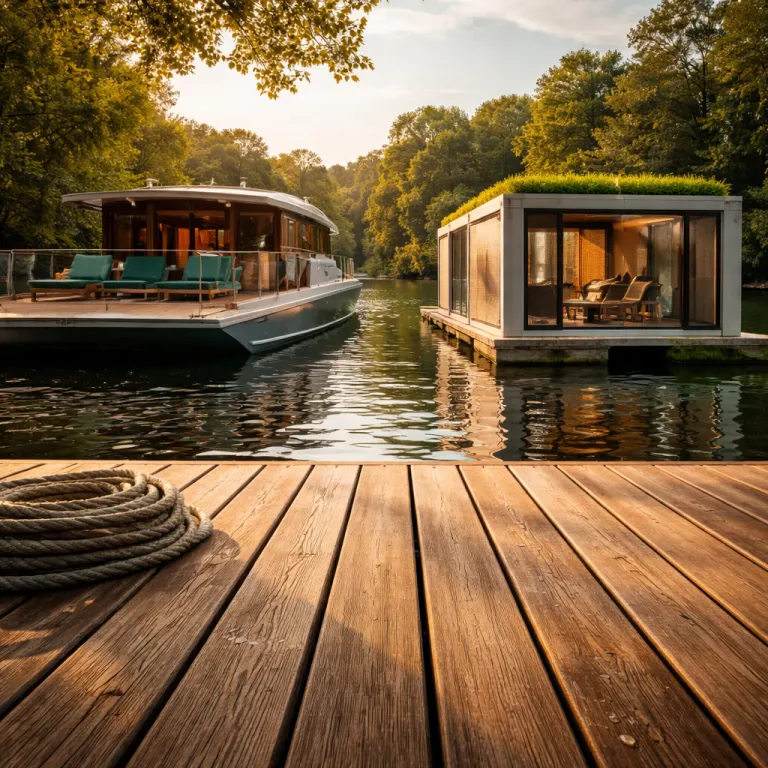
The new ceiling of floating luxury: Four Seasons and the five star yacht model
Luxury floating accommodation 2026 is no longer a thought experiment for hospitality boards. Four Seasons Hotels Ltd. has treated the sea as its next address, commissioning the approximately 679 foot Four Seasons I from Fincantieri to extend its luxury hotels playbook onto deep water. For guests used to penthouse rooms and city views, this yacht reframes what a floating hotel can be.
The ship is expected to carry around 95 residential style suites, spread across multiple decks of indoor outdoor living that feel closer to floating homes than to traditional cabins. According to early Four Seasons Yachts announcements, onboard plans include 11 dining venues and full scale wellness facilities, turning travel time into prime time, with Marc-Henry Cruise Holdings Ltd. and Four Seasons jointly overseeing operations as a moving resort rather than a conventional cruise. The stated ambition is clear and unambiguous: “Extend Four Seasons hospitality to sea. Provide exclusive yachting experiences. Set new standards in maritime luxury,” as outlined in early brand announcements and preliminary press materials.
This is the floating five star model at its purest, and it sets a high watermark for luxury floating experiences. Crew to guest ratios are being positioned close to private yacht standards, so service feels more private island than ship, and the relationship between interior space and water is choreographed rather than incidental. You are not just on a boat; you are in a hotel level environment where every corridor, terrace and lounge has been designed to keep the waterline in your peripheral vision.
For business leisure travelers, this branded ceiling matters because it recalibrates expectations for all floating accommodations. When you can book a Four Seasons yacht suite that rivals the best rooms in urban luxury hotels, you start to question why some floating houses still feel like upgraded caravans. The gap between the Four Seasons I and many existing houses floating on rivers or lakes is precisely what is driving innovation at the modular end of the market.
Yet this ultra premium tier will always be scarce by design, with limited suites and carefully curated itineraries across Mediterranean ports. Early indications from company statements suggest week long sailings priced in line with top tier hotel penthouses, which keeps rates high and access narrow. That scarcity is why the real story for most readers planning a stay on the water is not the next megayacht. It is the quiet revolution in modular floating accommodation that is making design led floating hotels and floating homes viable in places that could never justify a Sunborn scale investment.
Where the real innovation sits: modular floating houses and democratic design
While the headlines follow Four Seasons Yachts, the most consequential shift in luxury floating accommodation 2026 is happening in modular yards and design studios. Companies such as Bluefield Houseboats are treating floating houses as scalable infrastructure, not one off passion projects, and that changes everything for destinations and for guests. Their plug and play systems are reported to reduce assembly time from around twelve weeks to as little as ten days, a figure Bluefield highlights in its own materials, which is a structural change in how fast a floating resort can come to life.
For waterfront cities that want to test floating hotels without committing to permanent structures, modular floating accommodations are a pragmatic answer. A cluster of floating homes can be towed into a sheltered lake or river, connected to high speed utilities, and operated as a compact island resort with minimal seabed disturbance. When demand shifts, those same houses floating on one river can be relocated to another, turning capital expenditure into a flexible asset rather than a sunk cost.
This is where the democratic argument becomes compelling for travelers who usually book land based luxury hotels. Instead of waiting for a global brand to build a single floating hotel, regional operators can deploy several small scale floating resorts, each with ten to twenty rooms, a hot tub deck and curated views over a lake or estuary. The guest experience becomes less about marble lobbies and more about how close your living space sits to the water, how the kitchen window opens onto the canal, and how the morning bread might arrive by bicycle rather than by room service trolley.
Design collaborations such as Piet Boon with Davy & Orsted push this further, applying studio level residential design to floating houses without megayacht pricing. You see the same attention to joinery, lighting and acoustics that you would expect in high end city apartments, but translated into floating homes that move gently with the tide. For a business executive extending a work trip, that means you can book a stay where the desk faces the waterline, the Wi Fi is genuinely high speed, and the ambience is closer to a private island retreat than to a conventional hotel corridor.
Travelers who follow the broader floating hotel boom in waterfront hospitality will recognize how quickly this segment is professionalizing. The shift from one off houseboats to standardized floating accommodations mirrors the evolution of early guesthouses into modern hotels, with better safety standards, clearer data protection practices and more transparent terms of stay. A detailed analysis of this transition in waterfront hospitality can be found in our feature on the floating hotel boom in waterfront hospitality rewriting the rules of travel, which unpacks how design, regulation and guest expectations are converging.
Redefining luxury on the water: from design language to booking behavior
On land, luxury hotels often compete on thread count, brand partnerships and lobby theatrics. On the water, genuine luxury floating experiences are defined by the relationship between interior space, horizon and tide, which is a more elemental equation. The best floating hotels and floating resorts understand that guests are buying proximity to water and time, not just square metres of rooms.
Consider Fingal Edinburgh, the former Northern Lighthouse Board vessel now moored in Leith and operating as a precision tuned floating hotel. Its cabins are compact compared with some land based hotel suites, yet the experience feels expansive because every corridor, stair and porthole keeps you aware of the harbour outside. You are reminded that you are living on a boat, not in a generic hotel box, and that subtle awareness of water changes how you use the space.
In India, properties such as Lake Palace and Taj Lake Palace in Udaipur have long demonstrated how a lake based island resort can turn water into a stage for ritual and ceremony. Arriving by boat at dawn, watching the façades shift colour as the sun rises over the lake, you understand why these hotels are often referenced as archetypes of luxury floating hospitality. Yet even here, the most memorable moments are not the chandeliers or the butler courtesy, but the way your room seems to hover between city and water, with views that feel both intimate and cinematic.
Houseboat stays on the River Kwai in Thailand, or on the backwaters of Kerala, add another dimension to this definition of luxury. Many of these floating houses are relatively simple in material terms, but they offer something that even the most polished city hotel struggles to match: uninterrupted time with the landscape at water level. When you can slide open a panel, step from your bed to a small deck and slip into a hot tub while watching kingfishers skim the surface, the perceived value of that stay is anchored in experience rather than in hardware.
For readers comparing options on a premium booking website, this means interrogating how each floating accommodation frames its relationship with the waterline. Look for floor plans that show living areas aligned with views, not just marketing images of sunsets, and read how the terms of stay handle noise, mooring changes and shared decks. If you want more context on how different cities are integrating floating homes into their waterfront fabric, our elegant guide to Seattle houseboats and luxury stays on the water offers a useful case study in how design, regulation and guest expectations intersect.
How modular pods will shape your options over the next five years
The split between ultra branded vessels and modular floating pods is not a niche subplot in hospitality. It is the structural divide that will determine where and how you can book luxury floating accommodation 2026 and beyond, especially if you travel for work and extend into leisure. Four Seasons I shows what happens when a global hotel brand treats the sea as another address, but modular systems show how quickly that logic can spread to secondary cities and under explored coastlines.
For destinations that cannot support a full scale ship or a palace style island resort, modular floating hotels offer a lower risk entry point. A small archipelago of floating homes can be positioned along a sheltered lake shore or in a calm marina, each unit with two or three rooms, a compact hot tub and a private terrace. Operators can start with a handful of units, measure demand from business travelers and weekend guests, then scale up or relocate the houses floating to another bay if patterns change.
This flexibility will matter in places where climate risk, regulation and community sentiment make permanent waterfront construction politically or environmentally fraught. Modular floating accommodations can be designed to leave minimal trace on the seabed, to be towed away during storm seasons, and to comply with evolving guest safety and data privacy requirements. For travelers, that translates into more options to stay on the water in cities that previously only offered conventional hotels set back from the shoreline.
At the same time, the rise of modular pods will push branded luxury hotels to refine what they offer on the water. When a well designed floating accommodation with strong Wi Fi and thoughtful interiors can be booked at a fraction of a megayacht suite, the value proposition of ultra premium vessels will need to rest on itinerary, service culture and rarefied social context. Expect more emphasis on curated routes, from Mediterranean island chains to river journeys that echo the romance of the River Kwai, and on partnerships that turn travel time into a rolling cultural programme.
For the executive traveler, the practical takeaway is simple but powerful. In the coming years, you will be able to choose between a branded floating hotel that mirrors your preferred city hotel experience, and a modular floating home that feels more like a private island pod with just enough service wrapped around it. The smart move is to treat water based stays as a distinct category in your travel planning, reading not only the room descriptions but also the operational details, from high speed connectivity to how the property manages security, privacy and guest support, because on the water, those details shape the entire stay.
Key figures shaping floating luxury
- Four Seasons I is described in preliminary specifications as measuring approximately 679 feet in length, placing it firmly in the megayacht category and allowing generous space for 95 suites and extensive public areas compared with conventional cruise ships of similar capacity.
- The vessel is planned to offer around 95 luxury suites served by a crew to guest ratio positioned close to one to one, a level of staffing that aligns more with private yacht standards than with mainstream cruise operations.
- Onboard amenities are expected to include 11 dining venues and full scale wellness facilities, which means guests can access a variety of culinary and spa experiences without relying on port infrastructure during Mediterranean itineraries.
- Bluefield Houseboats reports that its modular systems can reduce assembly time for floating houses from around twelve weeks to as little as ten days, significantly lowering the barrier for destinations to pilot floating accommodations.
- The collaboration between Piet Boon and Davy & Orsted applies high end residential design principles to houseboats, signalling a broader trend where design studios treat floating homes as serious architecture rather than as niche curiosities.