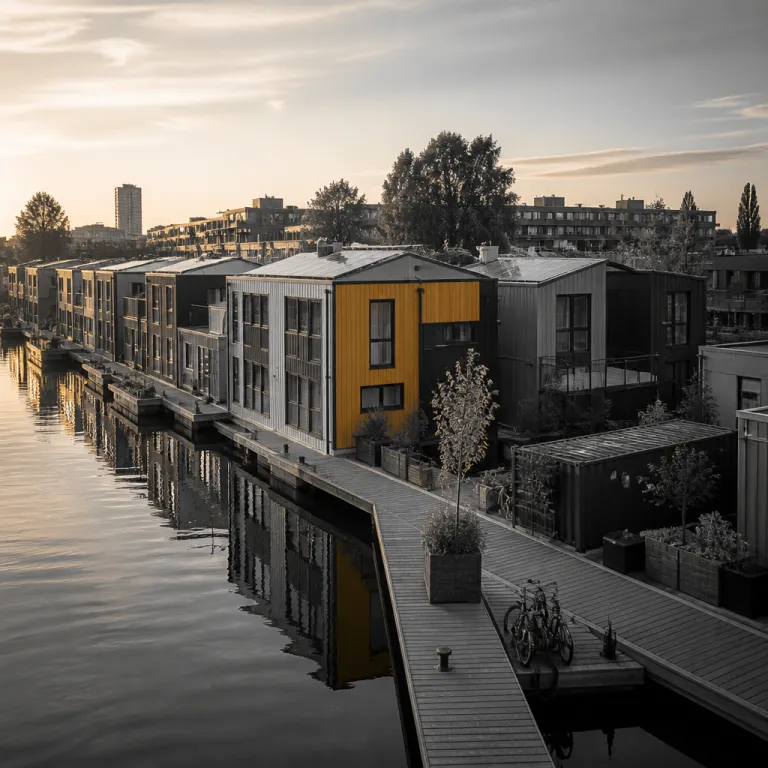
Schoonschip floating neighborhood in Amsterdam as a living blueprint
Schoonschip floating neighborhood in Amsterdam is not a resort; it is a working waterside district where daily life runs on a different rhythm. This floating neighbourhood sits on the Johan van Hasseltkanaal in the north of Amsterdam, where 46 homes share energy, manage their own water and quietly test how future cities might function. For business travelers used to polished lobbies and skyline views, this Dutch floating community offers something more radical yet surprisingly refined.
The project began as a bottom-up initiative from Schoonschip residents who wanted a sustainable way of living on water rather than beside it. They partnered with urban planners Space&Matter and circular economy specialists Metabolic to turn a disused canal into what is widely described as one of Europe’s most sustainable floating neighbourhoods, proving that a floating house can be both elegant and technically advanced. According to the official Schoonschip project information, the 46 dwellings are distributed across 30 platforms and together host around 144 residents, giving the neighborhood a scale large enough to generate meaningful data on energy, water and waste flows.
Each floating house in Schoonschip Amsterdam is moored on a concrete pontoon, permanently tethered yet gently responsive to every passing boat. These floating homes are arranged in short rows that create shared space on the jetties, so people naturally meet on their way to work, school or the tram into the city. As one resident summarized in a local interview, “you always meet someone on the jetty, but you can still close your front door and disappear into your own world.” The result is a neighborhood that feels intimate but not insular, where the line between private deck and communal living water is deliberately soft.
Design principles: energy, water and the quiet luxury of self sufficiency
What sets this floating neighborhood apart is not the architecture alone; it is the infrastructure beneath the surface. Every house plugs into a shared smart grid, where hundreds of solar panels feed locally generated energy into a system that balances demand between the 46 households. Metabolic’s technical documentation notes that the neighborhood collectively installed roughly 500–600 solar panels, designed to cover a large share of annual electricity demand and export surplus power back to the wider grid when conditions allow.
Heat pumps replace gas boilers in most homes, drawing warmth from the canal water and circulating it through well insulated interiors that feel calm, not experimental. Toilets use vacuum and composting systems, while grey water from showers and sinks is treated on site before returning to the canal, which keeps the surrounding water visibly cleaner than many parts of the city. Metabolic’s case study describes how the decentralized wastewater system and high-performance insulation together reduce overall environmental impact compared with a conventional Dutch neighborhood of similar size, turning everyday routines into a continuous test of climate adaptive living.
Design firm Space&Matter choreographed the urban layout so that every floating house has both privacy and a sense of shared responsibility for the canal. Narrow bridges, generous decks and carefully placed windows create layered space where residents can choose between retreat and interaction, a balance that luxury houseboat guests often seek but rarely find. The project shows that sustainable floating design is not about sacrifice; it is about orchestrating water, light and energy so that daily living feels effortless and technically robust at the same time.
Community first: how residents shaped a new way of living on water
Unlike many waterfront developments, this project did not begin with a developer’s brochure; it began with a group of Schoonschip residents who spent years refining a shared vision. They organized as a cooperative, invited Space&Matter and Metabolic to join, and treated every design decision as a community choice rather than a top down directive. That process explains why the neighborhood feels cohesive yet individual, with each floating house expressing its owners while still fitting into a collective rhythm.
The official Schoonschip FAQ captures this origin clearly with the line: “Who initiated the Schoonschip project? A group of enthusiastic residents.” Those same people now manage shared assets, from the smart grid to communal gardens, proving that a floating neighbourhood can be both technically advanced and socially grounded. Internal project materials describe how residents jointly oversee the energy cooperative, agree on visitor guidelines and coordinate maintenance, so governance is as carefully designed as the pontoons and platforms beneath their homes.
Daily life in this part of Amsterdam is quietly practical, not utopian, which is exactly why urbanists from Copenhagen to Miami study it. Children cycle along the jetties, groceries arrive by cargo bike, and neighbors share tools, kayaks and data about their energy use, all while keeping demanding careers in the wider city. For guests staying on premium river cruises in Goa or on other high end houseboats, this community shows how hospitality on water can move beyond views and into shared systems that genuinely reduce environmental impact.
From floating homes to climate adaptive cities
To understand what Schoonschip offers future travelers, it helps to distinguish between floating homes and amphibious architecture. The homes here are permanently floating, designed to rise and fall slightly with changes in water level but not to relocate or sit on land, which makes them ideal for sheltered canals rather than open sea conditions. Amphibious structures, by contrast, rest on the ground in normal conditions and only float when sea levels or river levels rise, a model better suited to floodplains than to a dense Dutch city canal.
Engineers and planners now look at this floating neighborhood as a test case for climate change adaptation in coastal cities worldwide. Research discussed by professional bodies such as the American Society of Civil Engineers (ASCE) highlights floating and amphibious structures as part of a broader toolkit for flood resilience, complementing rather than replacing dikes and levees. By turning a neglected canal into a high performing neighborhood, Schoonschip Amsterdam demonstrates how living water can become valuable urban space rather than a threat to be walled off.
The implications for hospitality are significant, because many cities facing higher sea levels also rely heavily on tourism and executive travel. A future premium houseboat district could combine the technical backbone of Schoonschip’s smart grid and water systems with the service standards of a five star hotel, offering guests a stay that is both indulgent and climate responsible. For families considering where children can safely enjoy life on the water, the principles tested here can inform next generation floating retreats that feel as secure as any land based resort.
What this floating neighbourhood teaches luxury houseboat hospitality
For a luxury and premium booking website focused on houseboats, Schoonschip is less a place to stay and more a benchmark. It shows that a floating house can deliver the same comfort as a high end suite while using dramatically less energy, provided that systems like heat pumps, solar panels and a shared smart grid are designed from the outset. It also proves that guests value a sense of community as much as private decks, especially when they can see how their stay contributes to a more sustainable floating model.
Future high end floating homes for travelers in Amsterdam and beyond will likely borrow three key lessons from this project. First, treat water as active public space, not just a backdrop, by creating shared jetties, small squares and routes where people naturally meet between their homes or cabins. Second, make sustainability visible but unobtrusive, so that solar panels, grey water treatment and efficient heating are part of the story without overwhelming the calm interior experience that discerning guests expect.
Third, design for rising sea levels and climate change from the beginning, rather than retrofitting defenses later when costs and disruption are higher. That means working with specialists like Space&Matter and Metabolic, engaging future residents early and using platforms such as the official Schoonschip Amsterdam project site to share data and lessons with the wider world. For executives extending a business trip into a few nights on a refined houseboat, the quiet confidence of a climate ready floating neighborhood may soon feel like the new definition of luxury.
FAQ
What is Schoonschip floating neighborhood in Amsterdam ?
Schoonschip floating neighborhood in Amsterdam is a purpose built sustainable district of 46 floating homes on 30 platforms in the Johan van Hasseltkanaal. It operates as a permanent residential community, not as a holiday resort or hotel complex. The neighborhood is designed to test climate adaptive living on water using shared energy, water and waste systems, and the official Schoonschip project description emphasizes its role as a pilot for circular, low impact urban development.
Can travelers stay overnight in Schoonschip ?
Schoonschip is primarily a residential project where Schoonschip residents live full time, so overnight stays are limited and usually not offered as standard short term rentals. The community’s visitor policy, summarized in its public FAQ, stresses respect for residents’ privacy and daily routines. Visitors interested in floating hospitality typically book other premium houseboats in Amsterdam’s canals while arranging a guided visit or professional tour of the neighborhood. This approach protects community life while still allowing planners, hoteliers and curious travelers to learn from the project.
How does the smart grid work in this floating community ?
The smart grid connects all homes so that electricity from rooftop solar panels is shared across the neighborhood rather than used only by individual households. When one floating house generates more power than it needs, the surplus flows automatically to neighbors with higher demand, which reduces reliance on the wider city grid. Metabolic’s energy analysis notes that residents can monitor their consumption in real time and that the system is designed to optimize self-consumption of solar power before drawing from external sources, supporting the goal of sustainable floating living.
Why are urban planners worldwide interested in Schoonschip ?
Urban planners from cities facing rising sea levels and climate change study Schoonschip because it demonstrates a practical model for building on water at neighborhood scale. The project combines technical solutions such as heat pumps, advanced insulation and water treatment with a strong community governance structure. This mix of engineering and social design offers a template that can be adapted to other coastal and delta cities, and is frequently cited in professional conferences and municipal climate adaptation strategies as a reference case.
What can luxury houseboat stays learn from this neighborhood ?
Luxury houseboat operators can learn how to integrate high comfort with low impact systems, using technologies like heat pumps, solar panels and efficient water treatment without compromising guest experience. They can also see the value of designing shared outdoor space that encourages gentle interaction between guests, similar to the jetties and decks at Schoonschip. By adopting these principles and drawing on documented examples from the Schoonschip project, premium floating stays can offer both refined service and credible environmental performance.