From legal workaround to kashmir houseboat heritage dal lake icon
On the still surface of dal lake in Srinagar, a row of carved wooden hulls tells a quiet legal story. British colonialists, barred from owning land in Kashmir, turned to the Hanji boat building community and asked for something radical yet simple. They wanted a floating houseboat that felt like a country home, a comfortable stay on water that sidestepped the land laws without breaking them.
This cultural adaptation was more than a clever loophole ; it was the birth of what we now call the kashmir houseboat heritage dal lake tradition. Historical records show that by the early twentieth century hundreds of houseboats lined lake Srinagar, each one a private refuge for officers who could not build bungalows on shore. The event is summed up in one archival explanation that still circulates locally : "To accommodate British visitors unable to own land."
Those first lake houseboat designs were modest, closer to elongated barges than the ornate houseboats dal travelers book today. Yet even then, the idea of a houseboat stay on dal lake or on nearby nigeen lake carried a certain romance that land based rooms could not match. The waterline view, the shikara ride from shore to your srinagar houseboat, and the sense of being in Kashmir but slightly apart from it, created a new kind of travel experience.
From cedar planks to carved palaces in walnut wood
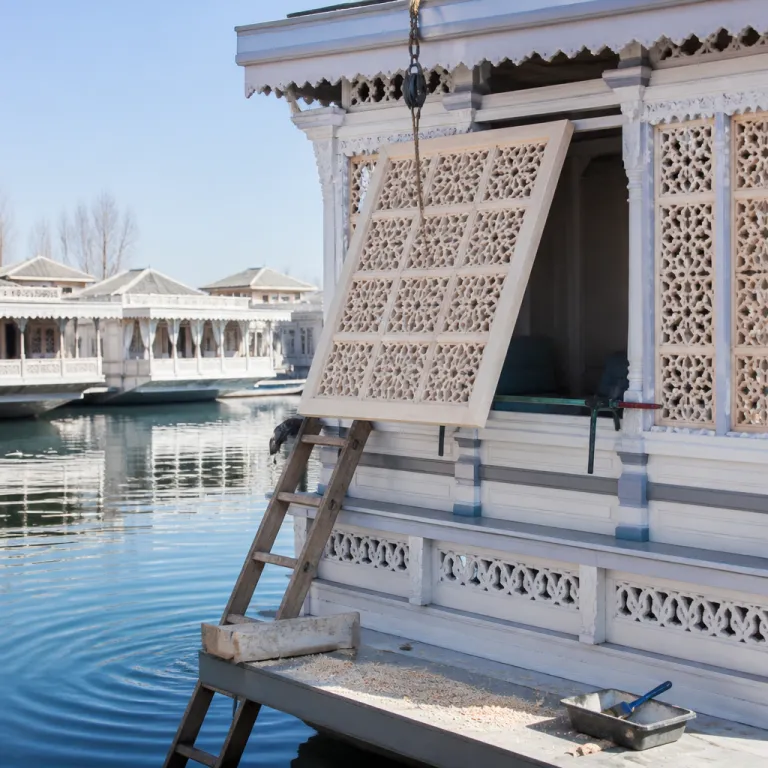
Early Kashmiri boat builders worked with sturdy cedar, using traditional wooden boats as the base for each houseboat. Over time, as demand for more refined houseboat rentals grew, artisans began to sheath interiors in richly carved walnut wood panels that turned every deluxe room into a gallery of floral motifs. Today, a well maintained houseboat dal property on dal lake or lake nigeen feels closer to a floating mansion than to a simple boat.
The evolution of design mirrors the evolution of hospitality expectations for any luxury houseboat stay in Kashmir. What began as basic rooms for long term colonial visitors has become a collection of deluxe rooms and suites, each with a private veranda, a perfect view of the lake, and a traditional Kashmiri sitting room warmed by carpets and copper samovars. Many srinagar houseboat owners now balance heritage details with modern comforts, so a comfortable stay includes hot water, Wi Fi, and heating without sacrificing carved ceilings or lattice windows.
For travelers who already know the polished canal boats of Amsterdam, the contrast is striking yet complementary. Where an elegant European barge might focus on minimalist lines, a kashmir houseboat heritage dal lake property leans into ornament, layering walnut wood, papier mâché ceilings, and embroidered textiles. If you are comparing refined canal stays, resources such as this guide to elegant houseboat rentals in Amsterdam sit naturally alongside research into houseboat srinagar options, helping you decide which waterway and which style of rooms suit your next stay.
Life on board: what a houseboat stay on dal lake feels like
Your first encounter with kashmir houseboat heritage dal lake usually begins at the shore side steps, where a narrow shikara boat waits. The shikara ride across dal lake or towards the quieter nigeen lake takes only minutes, yet it resets your sense of pace as you glide past lotus leaves, floating market vendors, and other houseboats. By the time you reach your chosen lake houseboat, the city noise of Srinagar has softened into the slap of water against the hull.
On board, a host from a generation old houseboat family welcomes you into a panelled lounge that smells faintly of polished walnut wood. Traditional Kashmiri carpets line the floor, while lace curtains frame a view of lake srinagar that shifts with every passing shikara and every change of light. In many houseboats, a deluxe room or one of several deluxe rooms opens onto a shared veranda, giving you a perfect place to enjoy morning kahwa as the floating market drifts by.
Daily rhythm on a srinagar houseboat is gentle but structured, and it suits solo explorers who like both privacy and connection. Breakfast might be served in your room for a more private start, or in a communal dining room where you can trade travel notes with other guests planning a shankaracharya temple hike or a second shikara ride at sunset. For inspiration on how floating stays fit into a wider travel strategy, especially as water based living gains attention, the editorial feature on floating stays worth booking before the season peaks offers useful context for planning your next houseboat stay.
Choosing the right side of the lake: dal, nigeen and beyond
For a first time visitor, the choice between dal lake and nigeen lake can feel subtle yet important. Dal, with its dense cluster of houseboats dal and its busy floating market, suits travelers who enjoy movement, while lake nigeen offers a quieter, more private stay with fewer boats and wider stretches of open water. Both sides of lake srinagar carry the same kashmir houseboat heritage dal lake story, but the mood on each place differs.
On the main basin of dal lake, you will find a higher concentration of houseboat rentals, from simple rooms to multi room floating palaces with several deluxe rooms and large decks. This is the perfect place if you want easy access to Srinagar’s old city, quick shikara connections, and a front row view of the evening lights reflecting off the water. By contrast, a houseboat srinagar moored on nigeen lake often attracts guests seeking a more comfortable stay with fewer passing vendors and more birdlife.
When comparing lake houseboat options, pay attention to how many rooms each property offers and how they are arranged. Solo travelers often prefer a smaller houseboat dal with just a few rooms, where the atmosphere feels like a private home and the host family has time to share stories about traditional Kashmiri life. For those curious about how floating architecture intersects with climate resilience and future urban planning, the long form analysis on living on water as climate strategy adds another layer of meaning to your choice of mooring.
Heritage under pressure: fewer houseboats, fragile waters
Walk along the boulevard side of dal lake and older residents will tell you how the view has changed. In the late twentieth century, estimates suggest that around two thousand houseboats floated on these waters, while more recent counts point to fewer than one thousand remaining. Each loss is not just a reduction in houseboat rentals, but the disappearance of a family business and a chapter of kashmir houseboat heritage dal lake.
The reasons are layered : environmental regulations, rising maintenance costs for cedar and walnut wood structures, and the complex challenge of improving water quality in both dal lake and nigeen lake. Authorities and local associations are working to balance preservation with ecological recovery, since untreated waste from any lake houseboat can contribute to pollution if not carefully managed. For travelers, this means choosing a srinagar houseboat that invests in responsible systems, even if that raises the nightly rate for a deluxe room or for interconnected deluxe rooms.
Environmental pressure also shapes the future of the Hanji community, whose traditional Kashmiri boat building skills are central to every houseboat stay. Some younger artisans now split their time between restoring older houseboats dal and building lighter boats for shikara ride services, adapting to shifting demand. As you plan your travel, consider that every night you enjoy in a private room on a well kept houseboat dal supports not only your own comfortable stay, but also a fragile, water based heritage that has few parallels outside Kashmir.
FAQ
Why were houseboats created in Kashmir instead of lakeside villas ?
Houseboats in Kashmir emerged because foreign visitors, especially British colonialists, were legally prohibited from owning land, so they commissioned floating residences on dal lake and nigeen lake instead of building on shore. This legal workaround allowed them to stay for long periods in Srinagar without violating land laws. Over time, these lake houseboat structures evolved into permanent, family run accommodations that define the kashmir houseboat heritage dal lake tradition.
What materials are used in traditional Kashmiri houseboats ?
Most traditional Kashmiri houseboats are built on cedar hulls, chosen for durability and buoyancy in lake srinagar. Interiors are often lined with intricately carved walnut wood panels, which give each room a warm, sculpted character. Many owners preserve these traditional Kashmiri materials even when upgrading deluxe rooms with modern amenities for a more comfortable stay.
Are houseboats on dal lake and nigeen lake still operational ?
Yes, houseboats on both dal lake and nigeen lake remain operational, although their numbers have declined significantly compared with previous decades. Travelers can still book a srinagar houseboat through specialized houseboat rentals platforms or directly with long established families. Choosing a well maintained property helps sustain the remaining fleet and supports ongoing preservation efforts.
What does a typical day on a Srinagar houseboat look like ?
A typical day on a Srinagar houseboat begins with a short shikara ride from the shore side to your chosen place on the lake. After breakfast on deck with a view of the water and the floating market, many guests head into the city to visit the shankaracharya temple or explore old Srinagar. Evenings usually bring another shikara ride at sunset, followed by dinner in the dining room or on a private veranda, where you can enjoy the quiet of the lake before returning to your room.
How can travelers choose the perfect place for a houseboat stay ?
To choose the perfect place, start by deciding between the livelier dal lake and the calmer nigeen lake, then look closely at how many rooms each houseboat offers and what level of privacy you prefer. Solo travelers often enjoy smaller houseboats dal with just a few deluxe rooms, while groups might prefer larger properties with multiple rooms and bigger decks. Reading detailed reviews that mention water quality, traditional Kashmiri interiors, and the quality of shikara ride services will help you find a comfortable stay that matches your expectations.