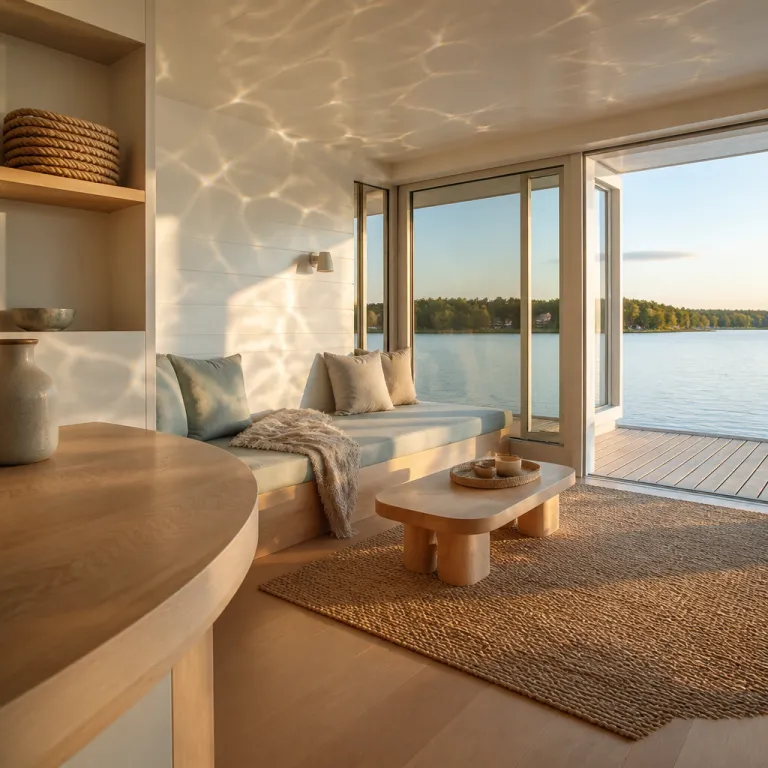
The waterline window and the art of borrowing the view
On a well designed houseboat, the first thing you feel is the view pressed right against the glass. The most successful houseboat interior design light schemes start with low, wide windows that sit almost at the waterline, so the room seems to float inside the surrounding light. When you sit on a sofa barely 40 centimeters off the floor and your eye level matches the horizon, the entire interior boat experience becomes about the water outside rather than the walls around you.
Architects working on premium boat housing in Amsterdam, Kerala or Sausalito now treat glazing as their primary marine accessory, then layer lighting and materials around it. They frame the panorama with slim stainless steel profiles, keep mullions narrow, and use pale interior surfaces so every reflected strip of daylight bounces deep into the space. This is where the main SEO focus, houseboat interior design light, stops being a technical phrase and becomes a lived sensation, especially when the first sun hits the canal and throws moving patterns across the ceiling.
When you browse a luxury booking cart on a specialist site, look closely at photos taken from a seated position, not just standing height. You want to see the waterline cutting through the middle of the frame, with no heavy furniture or tall accessories blocking the view. If the listing shows you can read a book in bed while watching navigation lights drift past the window, you are looking at a boat interior that has been planned from the outside in, not the other way around.
Light on water: ceilings, colors and the quiet power of reflection
Natural light behaves differently on a boat than on land, because it arrives twice, once from the sky and once bounced off the water. Thoughtful houseboat interior design light strategies use this double exposure, pairing large windows with matte white ceilings and soft neutral color palettes that catch every shimmer. When you wake early on a Kerala kettuvallam or a Seattle lake boat, you will see the ceiling light up before the sun fully clears the opposite bank.
Designers who understand marine behavior rarely rely on a single ceiling light or harsh spotlights, preferring layered interior lighting that can shift from bright to intimate. They combine warm white LED lights recessed in flush mount fittings with subtle strip light details under benches, steps and shelves, so the glow feels like it is rising from the water itself. On work friendly boats, a dedicated reading corner might use a focused LED light on a swivel arm, while the rest of the interior lights stay dim, allowing your eyes to rest on the darker deck outside.
For travelers choosing a floating office or creative retreat, the way artificial lighting led solutions are installed matters as much as the fixtures themselves. Look for surface mount LED lighting on beams, discreet navigation lights on the exterior, and interior exterior continuity where the same warm white tone runs from saloon to deck. A well reviewed houseboat workspace, such as those featured in guides to creating an office on a houseboat, will usually show how you can work by day in natural brightness and then read comfortably at night without losing the sense of being moored on open water.
Deck to interior flow: sliding walls, soft thresholds and life at the edge
The most romantic moment on any houseboat is often the step between interior and deck, where the air changes and the water suddenly feels close enough to touch. High end designers treat this threshold as a single interior exterior room, using full height sliding doors, fold back panels and level flooring so you move from sofa to deck chair without noticing a mount or frame. When the glass disappears into a pocket wall and the railings are slim stainless steel, the entire living area becomes a single floating terrace.
On Amsterdam canal barges and Scandinavian lake boats, this flow is often enhanced by continuous flooring in pale wood, which carries the houseboat interior design light right out onto the deck. A narrow strip of LED lights recessed along the sill can guide you safely at night, while low level boat lights on the exterior keep the hull visible without overpowering the stars. In tropical regions, from the Gulf to Southeast Asia, designers sometimes add ceiling fans and sheer curtains at this junction, soft accessories that move with the breeze and filter the light rather than blocking it.
When comparing listings on a premium booking platform, study how the deck is photographed in relation to the interior boat spaces. You want to see dining tables half inside, half outside, and lounge areas where you can read under a canopy while still catching reflections from the water. For a deeper sense of how regional traditions shape this deck to saloon relationship, look for guides that explain what houseboat design looks like in the Gulf, the Caribbean and Southeast Asia, then use that knowledge to choose the style of boat lighting and layout that best matches your own way of living by the water.
Small space discipline: storage, sightlines and the test of a well framed view
Space on a houseboat is finite, but the view is infinite, so the smartest interiors are edited with almost ruthless discipline. Designers who specialize in houseboat interior design light will often start by mapping every sightline from the bed, the galley and the main seating area, then build storage and furniture low enough not to interrupt those lines. The result is a boat interior where your eye always travels past the sofa, over the deck and out to the shifting surface of the water.
Built in benches with hidden storage, wall hung cabinets and slim tables on stainless steel legs all help keep the floor clear and the interior lights unobstructed. Instead of tall wardrobes, you might find under bed drawers lit by soft strip light details, or a compact galley where a flush mount LED light under each shelf keeps work surfaces bright without adding visual clutter. Even decorative accessories are chosen carefully, with a restrained color palette and a few marine references, so the real drama still comes from the changing sky and the navigation lights of passing boats.
When you scroll through a booking cart of potential stays, pay attention to how often the camera is pointed outward rather than inward. A well designed houseboat should make you look out, not in, and that is the simplest test of quality for any interior exterior composition. If every photograph seems obsessed with cushions and styling rather than the way the light hits the water, you may be looking at a floating apartment rather than a true boat housing experience that celebrates its mooring.
Materials, fixtures and lighting details that belong on the water
Materials on a houseboat must handle humidity, movement and salt, while still feeling soft enough for barefoot living. Designers who understand this choose oiled wood, linen, wool and unlacquered brass, then pair them with marine grade stainless steel hardware and carefully specified boat lighting. The aim is to create a houseboat interior design light that feels bright by day, warm by night and quietly robust in every detail.
Look for LED boat fixtures that are specifically rated for marine use, with sealed housings and corrosion resistant finishes that will not pit or rust. Interior lighting often combines compact LED lights in the ceiling with surface mount or flush mount fittings along corridors, plus discreet strip light runs under toe kicks and handrails to keep movement safe after dark. On the exterior, well placed navigation lights and low level lights for the boat deck ensure safety without flooding neighboring moorings with glare, a small but important mark of considerate design.
For couples planning longer stays, it is worth asking hosts about the exact lighting led setup, from dimmers to color temperature. Warm white LED lighting around 2700 to 3000 Kelvin usually flatters skin tones and timber, while cooler color options can feel clinical in a compact interior boat cabin. When you read detailed destination guides to the world’s houseboat waters, you will notice that the most praised boats share the same quiet virtues, from resilient materials to thoughtful boat lights, all working together so the brightest thing on board remains the water itself.
FAQ
How should I evaluate lighting when choosing a luxury houseboat stay online ?
Start by checking daytime photos to see how much natural light reaches the interior, especially at seating height. Then look for night shots that show layered interior lights, including ceiling fixtures, task lamps and subtle strip light accents rather than a single harsh source. Listings that mention dimmable LED lighting and warm white tones usually offer more comfortable evenings on board.
What materials age best in a humid houseboat environment ?
Marine grade stainless steel, oiled hardwoods and high quality outdoor fabrics tend to handle humidity and movement better than delicate finishes. Avoid interiors dominated by glossy lacquer or untreated metals, which can show wear quickly in damp air. When in doubt, choose boats that use the same materials you would expect on a well built yacht or coastal home.
Are LED lights always better for a houseboat than traditional bulbs ?
LED lights are usually preferable because they run cooler, use less power and last longer, which matters on a boat with limited energy reserves. They also allow for compact surface mount and flush mount fittings that suit low ceilings and tight spaces. The key is to choose warm white LED lighting with good color rendering, so the interior still feels inviting rather than overly technical.
How can I tell if a houseboat layout really makes the most of the view ?
Look for photos taken from beds, sofas and dining tables, not just wide angle shots from the doorway. The best layouts align these everyday positions with large windows or glass doors, keeping furniture low and storage built in so sightlines stay clear. If you can imagine reading or eating while watching the water at eye level, the design is probably doing its job.
What is the difference between interior and exterior lighting on a houseboat ?
Interior lighting focuses on comfort and function inside the cabin, using ceiling lights, task lamps and accent strips to support daily life. Exterior lighting covers navigation lights, safety illumination on the deck and subtle fixtures that mark steps or railings without causing glare. A well designed houseboat coordinates both, so moving between inside and outside at night feels seamless and safe.