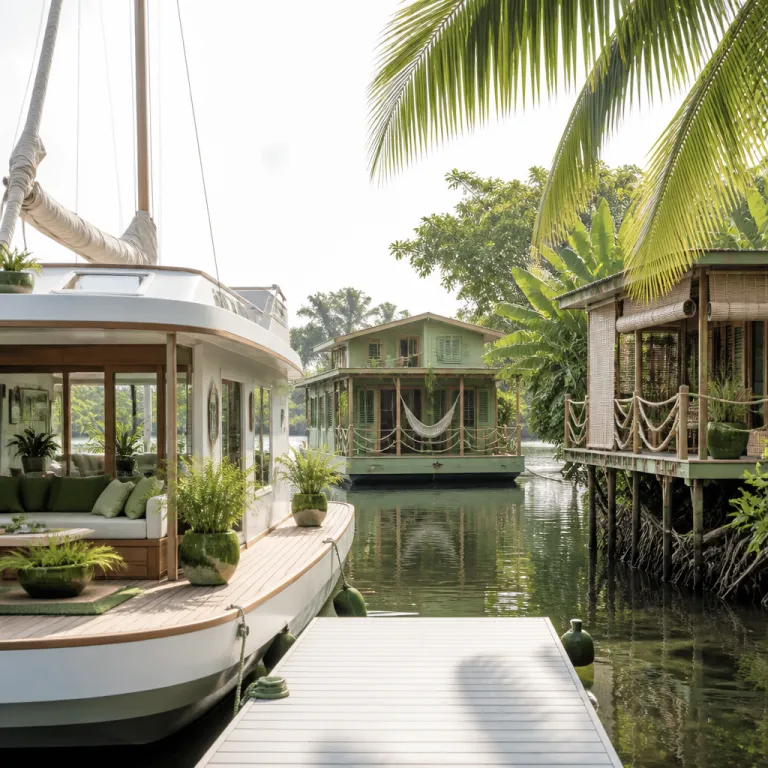
Houseboat design styles global in warm water regions
Houseboat design in warm water regions shifts dramatically once you leave temperate canals and move into the bright, hard light of the Gulf, the Caribbean, and Southeast Asia. On these waters, every houseboat is shaped by heat, humidity, and the way local communities have lived with water for generations, so the architecture feels closer to floating homes than to converted barges. For travelers used to land based suites, the first surprise is how much of your living space is open to the air, with shade, cross ventilation, and proximity to water doing more work than air conditioning ever could.
Designers here treat each boat as a calibrated response to climate, using roof overhangs, operable louvers, and deep verandas to provide comfort without sacrificing views or energy efficient performance. Many luxurious houseboats now integrate solar panels and discreet solar power systems on the upper deck, turning the hard tropical sun into quiet energy that supports long term stays with minimal generator noise. When you book a luxury houseboat in these regions, you are often booking into a complete systems houseboat, where water treatment systems, built storage, and hybrid power are as carefully considered as the interior fabrics.
Architects, marine engineers, and interior designers collaborate closely to ensure that houseboats built for warm seas can handle both calm lagoons and sudden squalls. Materials such as steel, aluminum, fiberglass, and wood are selected not only for aesthetics but for how they age in salt water, how they respond to heat, and how they protect the living area from corrosion. Some are moored permanently while others remain fully mobile boats, yet all of these floating homes are designed to provide comfort that rivals high end homes on shore while keeping you only a handrail away from the water at any moment.
Gulf region: shaded decks, smart systems, and sculptural forms
In the Gulf, warm water houseboat design is defined by intense sun, warm nights, and a taste for sculptural silhouettes that read clearly against flat horizons. The most ambitious houseboats offer shaded outdoor living space that feels like a private majlis on water, with deep sofas, misting systems, and carefully oriented openings that catch the slightest breeze. Under the surface, advanced treatment systems, desalination units, and shore compatible systems houseboat technology keep the experience seamless for guests who expect hotel grade reliability.
Projects such as the Floating Seahorse villas in Dubai’s The World archipelago show how regional designers use CAD software, 3D modeling, and durable materials to create floating homes that are as expressive as any villa. These houseboats built for the Gulf often combine solar power arrays of 5–10 kW with efficient hull forms, so the energy systems remain discreet while still supporting lighting, air conditioning, and smart home controls over long stays. When you step aboard a luxury houseboat here, you notice how the interior design borrows from contemporary Gulf residences, with marble, warm woods, and built storage that hides technical systems yet leaves the main content of your stay focused on water, sky, and city skyline.
Travelers comparing options should look closely at how each houseboat uses space and power, not just at the number of bedrooms. Some floating homes prioritize vast upper decks for entertaining, while others carve out quieter living areas below, with generous glazing that frames the waterline and distant towers. For design focused guests, this is where a curated guide to small space brilliance, such as the insights shared on thoughtful houseboat design lessons, becomes invaluable when reading between the lines of glossy listings.
Southeast Asia: vernacular craft, monsoon logic, and light footed luxury
Across Southeast Asia, tropical houseboat design is filtered through long traditions of living on water, from Cambodia’s Tonle Sap villages to Vietnam’s Ha Long Bay fishing communities. Here, the most interesting luxurious houseboats borrow the logic of vernacular boats, using lightweight structures, raised decks, and flexible interiors that can adapt to monsoon cycles and shifting water levels. BMT Asia Pacific’s Sea-Suite concept of modular houseboats in the region illustrates how contemporary designers can respect local boat forms while upgrading comfort, privacy, and energy efficient systems for international travelers.
These floating homes often rely on open air living space, sliding panels, and deep eaves rather than heavy insulation, which would trap heat in the tropical climate. Many houseboats offer hybrid power solutions, combining solar panels with shore power or low noise generators, so guests can enjoy long evenings on deck without the constant hum of machinery. When you book a houseboat here, pay attention to how the interior layout handles cross ventilation, how the built storage is integrated, and whether the treatment systems are robust enough for long term stays during wetter seasons.
For remote workers or solo explorers planning to balance work and life afloat, the best properties now carve out compact yet refined work zones that face the water. Guidance on how to create an office on a houseboat, such as the practical advice shared in refined work life afloat, can help you read floor plans and photos with a more critical eye. In practice, the most successful Southeast Asian houseboats built for premium guests feel like agile homes that can share space between leisure and productivity, with every square metre tuned to the rhythms of water based life.
Caribbean: hurricane ready elegance and open horizon living
In the Caribbean, warm water houseboat design must reconcile two opposing desires, the urge for open decks and glassy facades, and the need for structures that can handle storms and, in some areas, hurricanes. Architects and marine engineers respond by reinforcing hulls, specifying storm rated glazing tested to common hurricane standards, and designing rooflines that can be secured quickly, so a luxury houseboat can shift from breezy pavilion to protective shell when forecasts change. For travelers, this means that the most refined houseboats offer both generous outdoor living space and subtle structural muscle, even if you only ever experience the calm side of their engineering.
Many Caribbean floating homes now integrate solar power with battery banks sized for at least a full day of independent operation, allowing them to function as semi independent homes when marinas lose grid power. These houseboats offer a different relationship to water than land based resorts, because you wake to the sound of small waves against the hull and end the day with uninterrupted horizon views from your living area. When comparing listings, look for clear information about energy systems, water treatment systems, and how the boat is secured during storm season, as these details signal a serious approach to safety and long term maintenance.
Interior design in the region tends to favour light woods, salt tolerant fabrics, and layouts that keep circulation paths clear, so you can move quickly from interior to exterior when weather shifts. Some properties echo the feel of central Paris apartments in their use of classic furniture and art, yet the constant proximity to water keeps the atmosphere more relaxed and tactile. For solo travelers, the most appealing luxurious houseboats in the Caribbean provide comfort through thoughtful details, such as shaded reading corners, well placed built storage, and systems houseboat controls that are intuitive enough to use without a manual.
From Sausalito to central Paris: what warm water innovation means for travelers
Looking beyond the Dutch canal archetype, houseboat design styles global now form a spectrum that runs from the modernist lines of Craig Steely Architecture’s Sausalito houseboat to the climate tuned forms of Gulf and Southeast Asian floating homes. The common thread is a focus on living well on water, where every design decision, from hull shape to window placement, is about how life actually unfolds on board over long stays. For guests, this means that choosing the right houseboat is less about counting bedrooms and more about reading how the design handles light, heat, privacy, and the subtle boundary between interior and exterior space.
Across regions, the most successful houseboats built for premium travelers treat energy as a quiet backbone rather than a spectacle. Many connect to shore based electricity, water, and plumbing systems, while others rely more heavily on solar energy and advanced treatment systems to remain independent for long periods. As one technical overview notes, “Materials include steel, aluminum, fiberglass, and wood.” and “Some are moored permanently; others have propulsion systems for movement.” and “Many connect to shore-based electricity, water, and plumbing systems.” which neatly summarises the structural and systems palette behind the scenes.
For design curious travelers, a practical way to navigate this diversity is to think in terms of how each boat will support your preferred rhythm of life. If you plan to stay long term, prioritise energy efficient systems, generous built storage, and layouts that can share space between work and leisure without feeling cramped. When a listing lets you skip main marketing fluff and skip content that focuses only on décor, and instead offers a clear table of contents style breakdown of systems, areas, and capacities, you are usually looking at a houseboat whose design has been considered as carefully as any high end home.
FAQ
How do warm water houseboats stay comfortable in tropical heat ?
Houseboats in the Gulf, Caribbean, and Southeast Asia rely on open air layouts, deep shading, and cross ventilation rather than heavy insulation. Many combine these passive strategies with solar power and efficient air conditioning to keep interior spaces comfortable. When booking, look for floor plans that show generous verandas, operable windows, and covered decks, as these features matter as much as the cooling capacity.
Are houseboats in these regions usually mobile or permanently moored ?
Both options exist, and the choice depends on local regulations and the concept of each property. Some luxury houseboats are fully mobile boats with propulsion systems, allowing repositioning within bays or archipelagos, while others are effectively floating homes secured to fixed moorings. Listings that clearly state mooring type, navigation limits, and crew arrangements make it easier to match the experience to your comfort level.
What should I check about utilities before booking a luxury houseboat stay ?
For longer stays, ask how the houseboat handles electricity, fresh water, and wastewater treatment, and whether it connects to shore based systems or operates independently. Properties with robust treatment systems, reliable shore power, and backup solar energy generally provide a smoother guest experience. Clear information about these systems is a strong indicator of professional management and serious maintenance.
How do warm water houseboat designs differ from those in Northern Europe ?
Warm water designs prioritise shade, airflow, and lightweight structures, while Northern European houseboats focus more on insulation, glazing performance, and protection from cold. In the Gulf, Caribbean, and Southeast Asia, you will see more open decks, sliding panels, and roofs with generous overhangs. These differences directly affect how you use the living space, so climate specific design should be part of your booking criteria.
Is a houseboat stay suitable for solo travelers who need to work remotely ?
Many contemporary houseboats now include compact work areas with good natural light, reliable Wi Fi, and views over the water, which can be ideal for solo travelers. When evaluating options, look for photos or plans that show a dedicated desk, accessible power outlets, and quiet separation from social areas. Guides focused on work life afloat can help you interpret these details and choose a layout that supports both productivity and relaxation.
Quick checklist for comparing warm water houseboat stays
Before you book, confirm how utilities are supplied (shore power, solar capacity, water treatment), whether the boat is mobile or permanently moored, how it is secured in storms, and what work friendly amenities are provided, including Wi Fi, desk space, and charging points.